Monday, 10 May 2021

International Louis Day

Today, my darling grandson, Louis Robert Blackwell Baines, turned three. We've already had multiple videos of him opening his presents - very diffidently opening his presents, I thought. 

To lead off this post, here are a few of my favourite pictures of the boy from past visits. Well, okay, quite a few. How's a guy to choose?


I need to some new ones. Get me that second jab! I wanna go to England.

*

Yesterday was a write-off. I slept very badly the night before,  woke a little after four and never went back to sleep - not sure why. 

I have noticed, though, that if I have a long sleep in the first part of the night - and that night I slept from 11:30 to 4:10, when on a normal night, I could be up twice in that interval - I often have trouble going back to sleep. It's almost as if my body is saying, 'Okay, you've had almost five hours, that's enough.' 

I have wondered if the epidemic of sleep deprivation that is so much written about now - of which Karen and I are sufferers - might be partly misdiagnosis. Do we really all need seven to eight hours? I sometimes feel better and more energetic on days when I have less.

Four and a half hours is never going to be enough, though.

That said, I did my usual 35-minute fast walk in the morning yesterday, I had a 40-minute nap in the afternoon, stayed awake until almost 11:30 last night - and I feel more or less fine today, just a bit weary. I was able to do my usual 5K run in the morning.

*

It's the late 1880s and Frederick Douglass, now in his 70s and starting to slow, accepts a diplomatic post from the new Republican president, Benjamin Harrison. He is sent as "minister" to the Republic of Haiti, the part of Hispaniola governed by descendants of rebellious slaves. 

The new administration wants to establish a refueling port somewhere in the Caribbean to support its merchant marine and has zeroed in on one in Haiti, Mole Saint-Nicolas. Part of Douglass's brief is to negotiate an exclusive lease on the port. The mission goes badly - not, if Blight is to be believed, because of any failure on Douglass's part- and he eventually resigns and returns home to retirement, and recrimination from enemies over his supposed poor performance in Haiti.

Douglass was chosen because he was a black man who would presumably inspire trust in the island nation's black government, which had just changed after a violent coup. Douglass was perhaps too sympathetic to his host's sensitivities over matters of sovereignty. He also flat-out disagreed with the policy of some in the administration of using intimidation and, if necessary, force to get its way. 

He was saddled with a hawkish military man,  Admiral Bancroft Gherardi, as co-negotiator. At one point during the process, seven American war ships were docked in Port-au-Prince harbour. Gherardi made the further mistake of raising the spectre of manifest destiny doctrine, suggesting it was America's "destiny" to occupy Mole Saint-Nicolas. The Haitians turned down the lease proposal, and Douglass went home.

In the years immediately following this misadventure, Douglass vigorously defended himself in writings and speeches from critics who accused him, often in racist terms, of failing the mission, of insufficient loyalty to his country and of general incompetence.

*

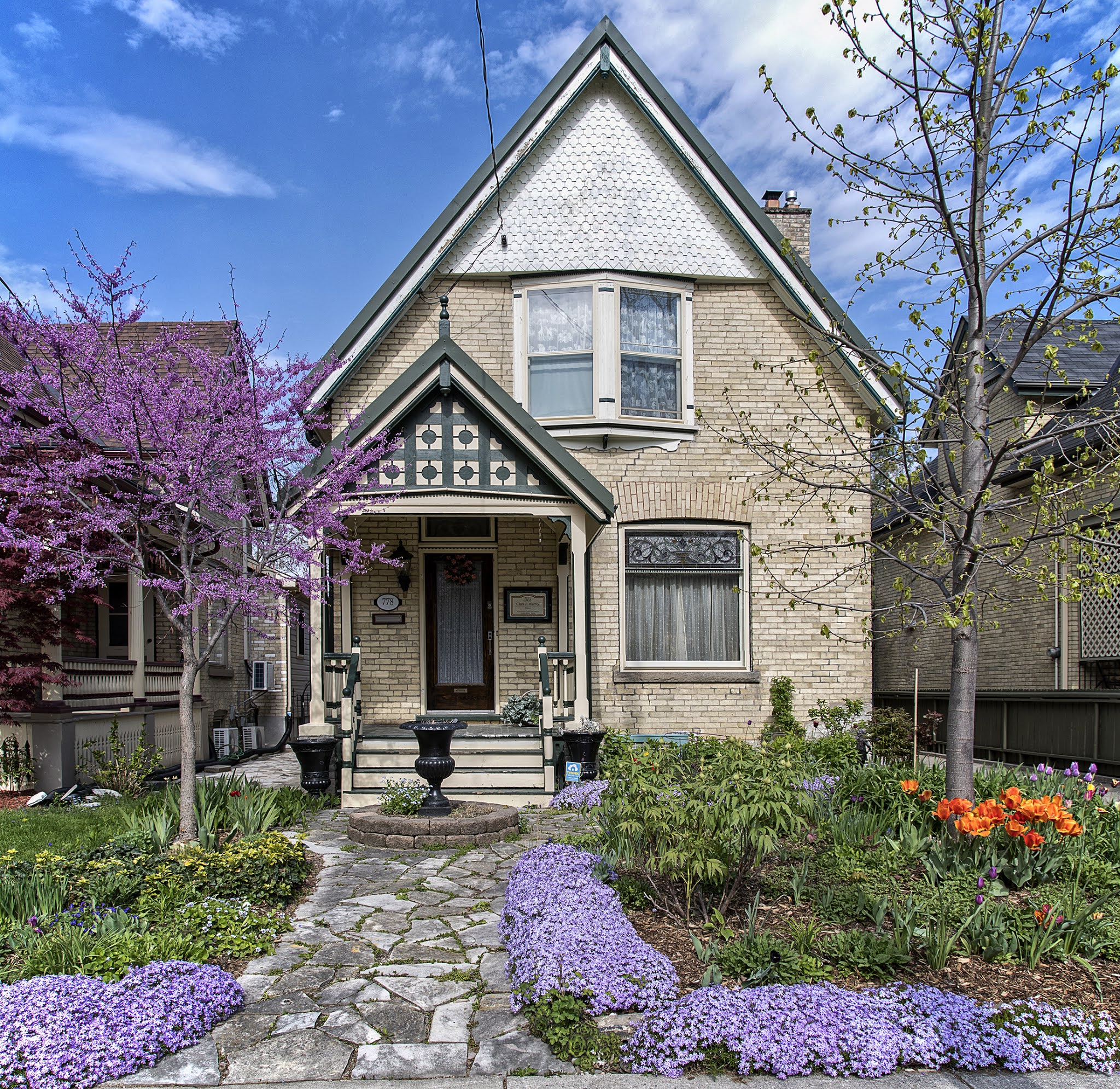
I didn't have a lot of energy for anything yesterday, but did work on some photographs - some from a late afternoon ramble the day before. I walked east on Central Ave. and across Colborne into Old North. I'm not quite as pleased with the day's output as I had been on my first day of shooting Old North homes and gardens, but I did get a few I liked.


*

I also worked on re-editing pictures from our 2013 winter away in the Southwest of the US. The pickings were sometimes slim as I hit more folders decimated by the file corruption I described earlier. In some folders, most of the pictures were spoiled. 

Near the end of our time in Tucson, we got around to exploring the Barrio Historico, an old, predominantly Mexican neighbourhood just south of the city centre. It's mostly low-rise adobe row houses, some with blank street fronts, like these. In the first picture, the small sign on the yellow door on the left tells callers to enter via the patio at the back.


When we left Tucson, we headed first for Sedona. Most of the Sedona pictures were spoiled. Next stop was the Petrified Forest National Monument, a desolate area named for the petrified wood found there in abundance. We drove around in the park for over an hour, stopping here and there to take pictures of the bizarre landscapes.


Canyon de Chelly was the next stop. I took lots of pictures there. We loved the place, but I couldn't find any shots in the folders of raw files that were both free from corruption and from which I hadn't already made reasonable pictures.

Next it was Santa Fe, which disappointed us a little, I think. There are a few good museums, though, including the Museum of International Folk Art, where I photographed these south Asian marionettes. 


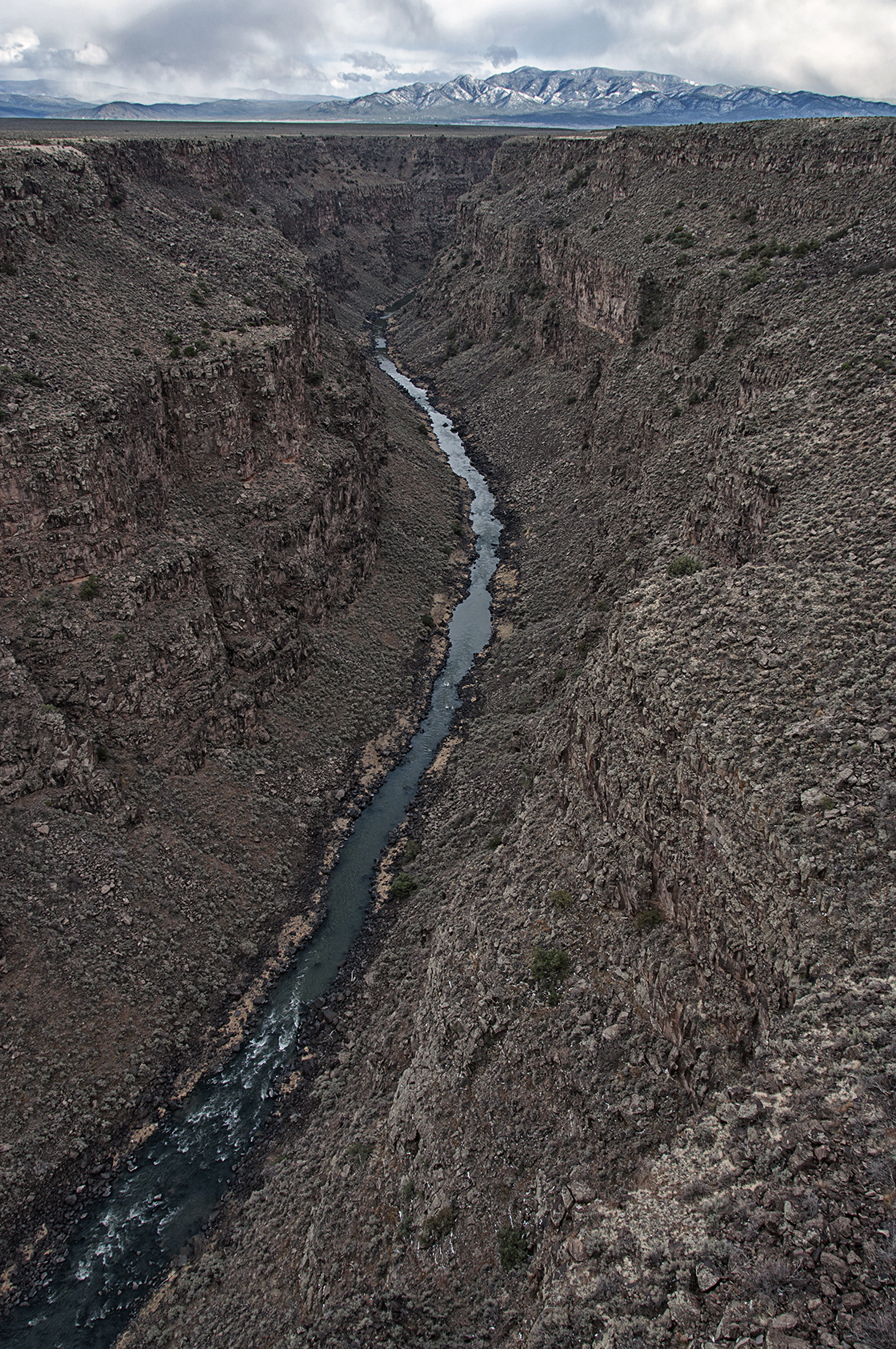
From there, we drove through mountains to Taos, the famous artist's colony where Georgia O'Keeffe spent time before settling on her own property not far away. One of my favourite subjects was the view from the Rio Grande Gorge bridge on US64, with the Guadelupe Mountains in the background.


Saturday, 8 May 2021

A chilly ride

For the first time in weeks, I did not have the pleasure of Fred Douglass's company for my morning exercise. Since sometime in March, I've been listening to the audio book of David W. Blight's long, Pulitzer-winning biography, Frederick Douglass: Prophet of Freedom - and enjoying it. 

Today, however, I rode my bike for exercise, killing two birds with one stone by running an errand as well. We had ordered 16 sausages for curbside pickup from Butcher's Blend at the Western Fair Market. Some of my indirect route there was along river path, but some was on city streets, and  I didn't think it prudent to wear earbuds that might drown traffic sounds. 

I have never been a great reader of biographies. I've tried reading the lives of a people I admired, but with few exceptions got bogged down and bailed before the end. Audio books solve the problem for me. I don't have to do the work, and I can continue to read other, more compelling fare on my own. I will probably look for another biography when Fred finally kicks the bucket - or some other non-fiction.

*

Yesterday afternoon, I went for a somewhat longer ramble than intended. Given how pleased I was with some of the house-and-garden pictures I'd taken the day before, I headed back into an old residential neighbourhood, this time Woodfield Village. I walked east as far as Adelaide St., mostly on Princess Ave., then back along Dufferin St. 

I'm not quite as pleased with the resulting pictures - the lighting wasn't as good for one thing - but did get a few I like. Well, quite a few, I guess.


There really are some lovely homes in this city! And many of their owners spare no expense or trouble in making the outsides beautiful.

On the walk back along Dufferin, I came upon a woman doing the same thing I was: taking pictures of gardens and flowering trees. We spoke for a few minutes. She felt there really were more trees blossoming this year, with more blooms. She also gassed on about the healing effects of walking and noticing the blooms, especially for people with mental health issues. She said she did it every day.

Talking to her reminded me of something I read in The Hidden Life of Trees. Trees that don't fruit every year "decide" whether they will or not, and start preparing, the year before. And all the trees of the same species in a forest will fruit the same year. Scientists believe trees base their decisions on assessments of likely local conditions. 

The author mostly talked about how trees in the German woods where he works are thought to calculate when the population of critters that eat their seed pods or nuts will be lower, so their seeds have a better chance of rooting that year.

Of course, these are not forest trees we're talking about here in London, and I don't even know whether any of our locally-growing flowering trees only fruit some years. Can trees forecast climate conditions, I wonder?

The woman I spoke to thought the reduction in pollution might be a factor in more trees blooming with more blooms.    


Friday, 7 May 2021

Spring is back

Another day with no blog post yesterday. I'm trying not to be quite so OCD about it. 

I did have a fairly productive day photographically, though. In the morning, I worked on pictures from winter 2013 in Arizona. I found the shots I'd taken at a pop-up butterfly exhibition sponsored by the University of Arizona. Ralph Lutes was staying with us then. 

I can't remember where it was, not at the university - somewhere west of our house, I seem to remember. They had elaborate security in place to ensure none of the butterflies and moths escaped when visitors came in. Some of them were fairly rare. The space was very warm and humid. The bugs were fluttering around free. At the time, I think we learned the names of some, but I've forgotten them now.


Then in the afternoon, I went for a walk: down the east side of the north branch to St. James St., and across to Helmuth Ave., possibly one of the prettiest streets in the old north. Some of the spring gardens - and of course, the flowering trees - I spotted were spectacular. 


Finally, in the evening, bored, I idly scrolled through some very old pictures, from back at the dawn of the digital era. I came across some I'd taken in 2000 of Caitlin in our back yard on West Mile. My editor at The Toronto Star had asked me to provide a picture he could run with the column Caitlin was to begin writing for The Star's "Fast Forward" section - a kid's take on the technology revolution. 

I'm not sure which camera I used to take the pictures, or whether they were eventually used in the paper. I think one was. They are so Caitlin-at-15: bored, skeptical, impatient - or affecting those attitudes. And of course, absolutely gorgeous, without having any clue that was the case.


*

I did get out earlier in the morning yesterday for a run with Fred Douglass. Most of the day's passage was taken up with the European tour Douglass took with his new bride in 1886(?). This was after he had been replaced as Recorder of Deeds by the new Democratic president, Grover Cleveland. It ended up being an eleven-months trip. It took them first to England - where he visited old abolitionist pals, including Julia Griffiths - then to France, Italy, Egypt and Greece, before retracing their steps, taking in different cities in Italy.

Douglass didn't write much about it while travelling, but when he came home, he delivered many travelogue speeches. That was what today's passage was partly about  when I went out for my morning exercise. It also treated Douglass's continuing bitter resistance to the idea of reconciliation with the South, and the notion that blacks should split their vote between the two parties to increase their leverage. The Democrats were still the devil's spawn, the Republicans the only party for blacks. (How things have changed!)

Then came the 1888 election. Douglass stumped for the Republican presidential candidate, Benjamin Harrison, a choice about which he had deep misgivings. He also bitterly feuded with some black leaders, especially John Mercer Langston whose nomination as a Republican candidate for Congress in Virginia Douglass opposed, mainly, it seems, on grounds of personal animosity. The man was not perfect. He had an ego on him.

Harrison won by Electoral College vote, even though he lost the popular vote.

Wednesday, 5 May 2021

Karen in the desert

No, not a metaphorical desert, a real one. I continue to work through my pictures from winter 2013 in Tucson. I shot many of my wife in the desert. We spent a lot of time there, walking, exploring. Karen was just saying the other day that it was mostly the desert she liked about Tucson. I felt the same. 

So here's a little series: Karen in the desert.


It wasn't only Karen that I photographed in desert. I found lots of other oddities and points of interest. I was always trying to make pictures out of desiccated  deadwood we saw strewn along the paths. And saguaro cacti were a favourite subject - though we didn't see any others like this one growing out of the middle of a tree.


I say we both liked the desert best about Tucson, but it's not as if we disliked the city itself. We continued to be charmed by the residential architecture and landscaping we strolled past on our city walks and bike rides. And I kept photographing it when there was nothing else to shoot. 

We often walked through the slightly more upscale Sam Hughes district near the University of Arizona, a neighbourhood where lots of faculty members live apparently. The houses are still not huge, but tend to be bigger and better kept than in the area where we were staying. Here's another selection.


*

Another grey day today. I did get out for an exercise walk. Today's passage in my Frederick Douglass bio started with Douglass and his black and abolitionist allies railing against the horrendous 1883 Supreme Court decision in the so-called Civil Rights Cases. 

In an 8-1 decision, the court said the Civil Rights Act, which prohibited discrimination based on race, only applied to governments, not to individuals. So racist hoteliers, unions stewards, school administrators, train conductors, etc. could discriminate with impunity in the ways they always had. The decision, which was based in part on States Rights doctrine, paved the way for the Jim Crow laws that would come in a few years.

Most of the rest of the passage dealt with Douglass's personal life, mainly his "secret" - soon revealed - marriage to a white woman, Helen Pitts. She was 20 years younger than him, and worked in his Recorder of Deeds office. He didn't even tell his children he was getting married, just went to a city clerk with a couple of trusted friends. 

The marriage caused yet another media firestorm. The black activist community in particular was very critical. It was widely reported in the press as a blunder, or worse. Douglass maintained with some dignity that he had a perfect right to marry who he chose and that it wasn't of "public moment." Helen's family - staunch abolitionists - initially disowned her, although later some, not all, took her back. 

As ever, the negative press coverage often tipped into the scurrilous, grossly exaggerating the difference in their ages, or representing Helen, an educated middle-class woman with a strong record as an abolitionist and women's rights advocate, as not much better than poor white trash. One editorialist said the decision to marry Pitts suggested Douglass had entered a second childhood.  

Next, Rosetta's estranged husband, Nathan Sprague, who has apparently grown resentful of Douglass, brings a law suit against him, claiming that his sister, Louisa, had worked in the Douglass's home for years and never been paid. Another media circus ensues. Douglass fights back in the newspapers, as usual, but eventually settles out of court. 

Finally, Ottilie Assing, travelling in Europe, discovers she has breast cancer and shortly after, commits suicide. In her will, she leaves Douglass a substantial sum of money, her books and other keepsakes. 

*

I've just started reading a translation of the Spanish writer Arturo Perez-Reverte's 2010 novel, El Asedio (The Siege). It's a murder mystery set in the south coast town of Cádiz during the siege of 1811 by Napoleonic forces. 

This is the same conflict, The Peninsular War (1807–1814), commemorated in Goya's famous painting El tres de mayo de 1808 en Madrid or Los fusilamientos de la montaña del Príncipe Pío, a picture of Spanish prisoners of war being shot by a French firing squad.


It interested me because we spent a few days in Cádiz in 2016. And we've seen the Goya paintings from the Peninsular War at the Prado in Madrid.


Tuesday, 4 May 2021

Slippery slope?

Oh, dear! Another missed day yesterday. It was a down day altogether: rainy and cool - so no afternoon walk.

Most of the day - or at least the usefully-spent part of it -was taken up with processing pictures I had taken on a late afternoon walk Sunday. That day turned out much nicer than forecast: mild with some sun. I rambled over to Blackfriars and shot more blossoming trees. They are just spectacular this year. 

Karen and I were talking about this yesterday. She thinks they actually are more impressive this year than last, probably because of the different weather patterns. Which may well be. But I also wonder if we're just more receptive and observant of them because we don't have a heck of a lot else going on in our lives. And I've been particularly attentive because trying to photograph them.

Karen and I read a Ted Talk article recently about how to age "joyfully." One of the recommendations was to have and give flowers, that they actually trigger chemical reactions - oxytocin production - that make us feel better. It's speculated that is is possibly an evolutionary effect, that early humans figured out that where there were blossoms, especially on trees, later there would be edible fruit. 

In any case, here's some of what I got.


Ridiculously gorgeous. Not the pictures, the trees. And keep in mind, this is all within about six blocks of our building, going in one direction only. The trees, as the pictures show, seem more laden with blossoms this year, more densely packed.

*

I did get out for my exercise walk yesterday in the morning, and ran today - up to Gibbons Park and back. I'm still, as ever, listening to Frederick Douglass's story as told by David Blight in his Pulitzer-winning autobiography of the great man. What a life it was!

He is old now. After Garfield's election in 1880, Douglass is demoted - sort of - from Marshall of DC to Recorder of Deeds, another lucrative civil service job. His recognition by successive Republican governments earns him some enmity and criticism from within the black and progressive communities, who accuse him basically of selling out to the Republican party. 

They are also critical of his nostalgic return visits to some of the haunts of his youth, where he engages with the descendants of the slave owners who abused him. They, to be fair, treat him with at least the respect of inviting him into their homes. But some press reports suggest Douglass is kowtowing. 

The criticism directed at him is made more pointed by his rampant nepotism. His children are all employed in one way or another at some point by the Deeds office. Blight dismisses this corruption as the expected norm in 19th century Washington, but it certainly does not go without notice or criticism in the press of the day, including in the black press.

There is much upheaval in his personal life in the early 1880s. Grandchildren die of childhood diseases. Ottilie Assing finally gives up on Douglass after some bitterness between them and leaves for Germany, never to return. And then his wife of 45 years, Anna, the silent partner in his enterprise, dies after being sickly for a few years and finally suffering a stroke. 

Anna Douglass

Douglass is devastated. He's also beginning to slow down, but still can rise to the occasion with a stirring speech, as at an Emancipation Day banquet in Washington. He is revered by the black community, but not universally. Younger black leaders are beginning to chip away at his authority as the main spokesperson for the community.

*

Karen and I have been watching a new (to us) detective series, The Brokenwood Mysteries, that we both quite like. It's from New Zealand. It's well written with amusing characters. Maybe a bit Midsomer Murders-ish in its slightly tongue-in-cheek tone, although smarter and better acted. 

The lead is the deceptively clever but portly and slightly dissolute Detective Senior Sergeant Mike Shepherd. He's relocated to the fictional Brokenwood, an idyllic small semi-rural community, after the first episode in which he was sent from the city to solve a crime there. (The show is filmed in the Aukland area, with a town called Warkworth serving as the titular setting.) 

His partner is smart, pretty, thirty-something Kristin Sims who talks back to her boss with apparent impunity. There's a young male detective constable who gets all the joe jobs - he's quite amusing too, a bit of a lad, not too bright. And then there's the ne'er-do-well, part-Maori Jared who is Mike's neighbour and confidential informant.


We're getting Brokenwood on  Acorn, a service that streams mostly British TV and some movies. We've been getting Acorn free with our never-cancelled membership in the library we joined in Tucson when we were there in 2013. I've just discovered the library is losing Acorn, but Brokenwood is also available on Hoopla, a streaming service with similar content that many Canadian libraries offer, including ours. (We could also subscribe to Acorn for $7.49 a month.)

Sunday, 2 May 2021

For the second time in three months, I missed writing something here yesterday. Just bone laziness.

It's certainly not that the plague years have ended. There was a story in Saturday's Globe about a study that showed one shot of the Pfizer vaccine definitely doesn't protect you against some of the new variants. 

You begin to wonder, will it ever end?

We're still supposed to have our second jab by end of July and the prospects seem good that it will happen no later than that - and possibly earlier. A story in today's papers says Ontario has now given at least one dose to - I think it said - 41% of eligible people before the deadline the government had set for reaching that milestone.

*

Meanwhile, Karen and I are watching a plague story on Netflix - The Rain, a Danish production. One thing the protagonists are discovering is that the much-worse virus they're having to deal with - which initially infects people when they're touched by contaminated rain water - is a constantly-mutating moving target.


It's a good series. The characters and actors are all fairly young. It's a bit like The 100, another sci-fi post-apocalypse story, in that respect. I'd recommend it - The Rain  -except to people who just can't take anything more about mutating killer viruses. Which might, understandably, be almost everyone at this point.

*

Ran this morning. I'm not used to running in warm weather (18C or 19C when I went out.) It really took it out of me.

It's the late 1870s. Fred Douglass makes a provocative speech larded with satirical observations of the Washington political class. One of his comments - that white southern politicians have many of the same speech patterns and mannerisms as blacks - is met with a firestorm of indignant criticism and abuse. 

He argues for the truth of the observation by pointing out that most of these middle- and upper-middleclass southerners had black mammies when they were growing up. But Douglass must have been deliberately trying to get the goat of his racist enemies.

He is also embroiled in the controversy over the so-called Kansas exodus - of black southerners who want to emigrate to the still wide-open state of Kansas where they can buy land and form their own communities - and not be brutalized by white supremacists. 

Most Democrats, some republicans and even some influential black leaders are supportive of the exodus. Douglass is a hold-out, telling blacks they should hang tight and weather the storm of racism in the south, that the leaving will be a victory for the white southerners.

In the early 1880s, apparently in a better financial state than he has been in the past - despite having to support most of his extended family - he buys a large property in the nearby countryside and moves there with his family and hangers-on. It's here he begins to write his third and final autobiography,  The Life and Times of Frederick Douglass: A Will To Be Free.

The relationship with Ottilie Assing, his German friend, is winding down. Douglass is losing patience with her demands and interfering - although he still invites her to stay for extended periods at the new homestead. She is soon to depart again for Germany, though, never to return.

Blight quotes from a memoir written in the 1940s by one of Douglass's grandchildren in which she describes Douglass as a playmate-grandpa to her and her siblings and cousins at the new place. He would work half the day in his study, then come out and play and rough-house with his grandchildren in the afternoon. He also liked them to braid his long hair and put ribbons in it. It doesn't quite gibe with his dignified statesman-like public image. 

Frederick Douglass (circa 1879)
Douglass stumps for Garfield, the Republicans' compromise candidate, who wins the 1880 election with a plurality of a little over 10,000 votes. Democrats control the two houses, though. 

*

I went back to my winter 2013 pictures today and discovered that many of the RAW files - the files that come straight from the camera's sensor, with nothing done to them - from early February have been corrupted, probably when transferred from one hard drive to another. There's nothing that can be done to restore them apparently. 

It's maddening, but not a tragedy. I still have the best of my shots from that year, already edited, in a separate folder. They seem fine.

In the meantime, I did find a few of the RAW files to fiddle about with, including two more in my series on Tucson residential architecture and this one of Karen walking in one of the desert parks just outside the city.


Too hot!

I was starting to think The Plague Years  might be dead, but no, here I am again, after a four-day break.  Summer has arrived in southwester...